DIY Book Nook Kits
Every kit in our hand-picked collection — laser-cut 3D wooden dioramas that slot between your books and light up your shelf. Filter by theme below or read our guides to find the right kit for you.
What is a DIY book nook kit?
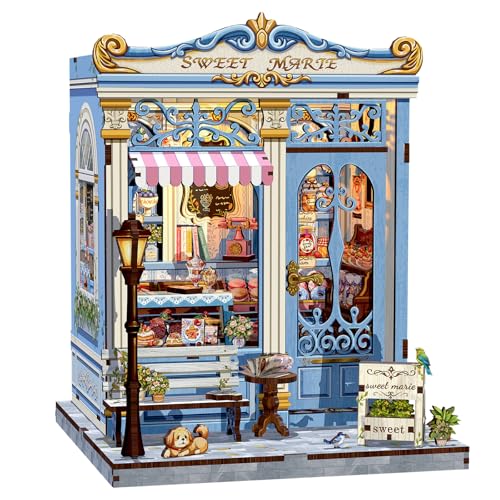
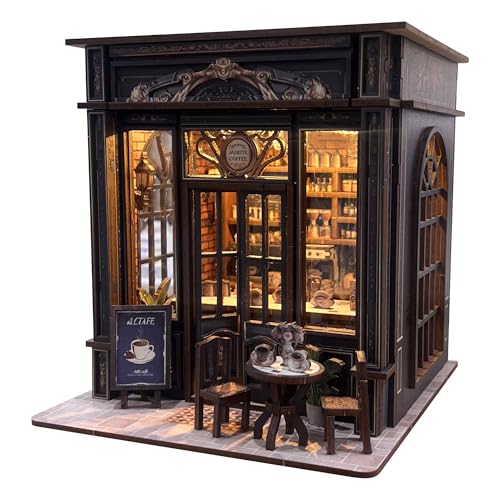
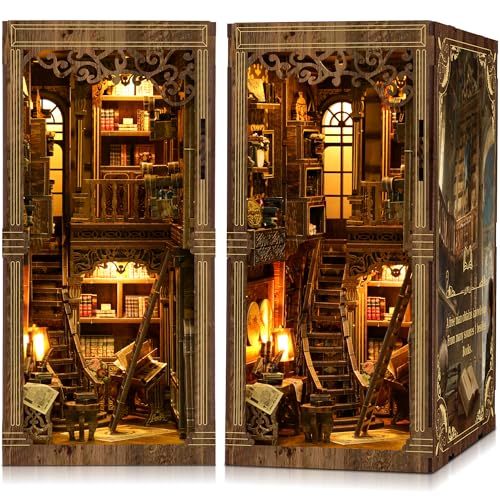
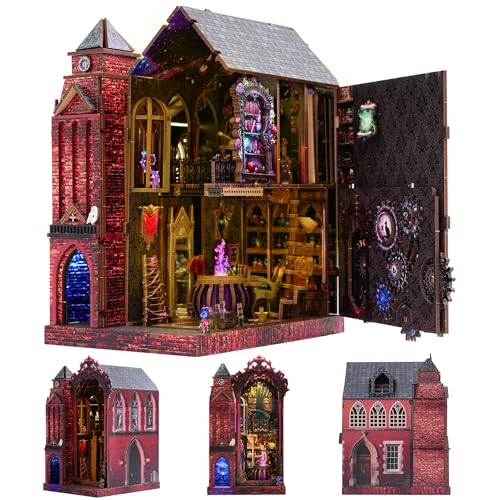
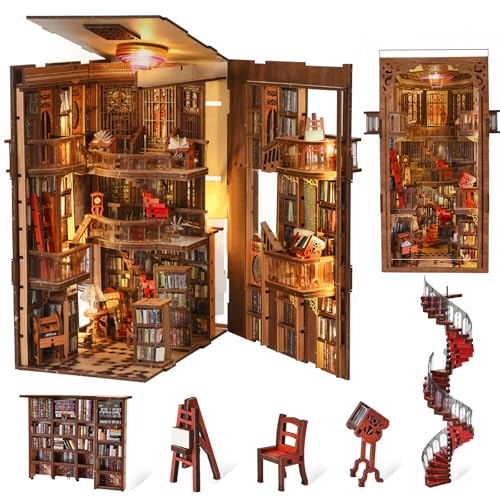
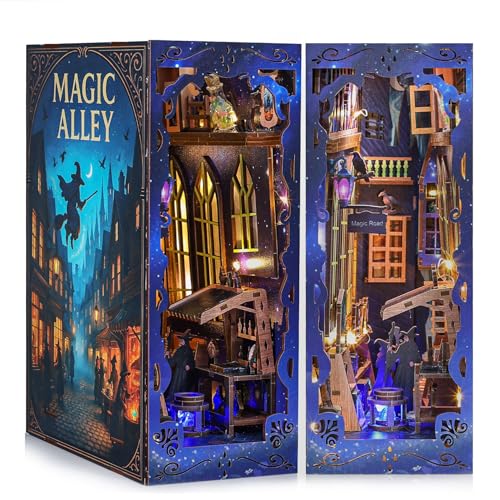
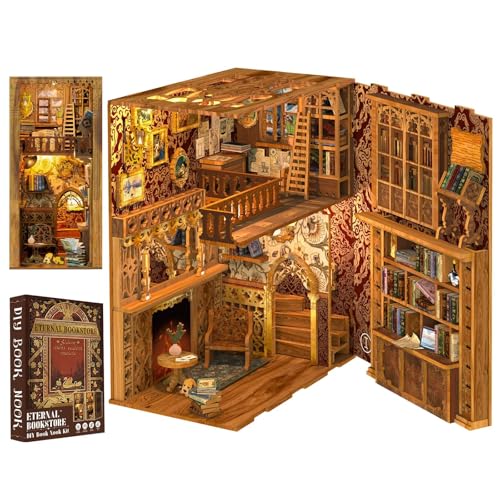
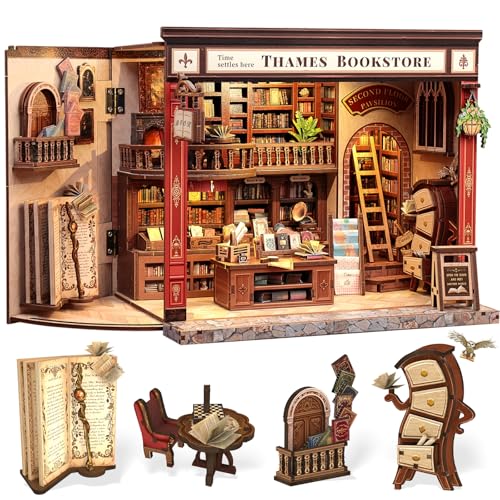
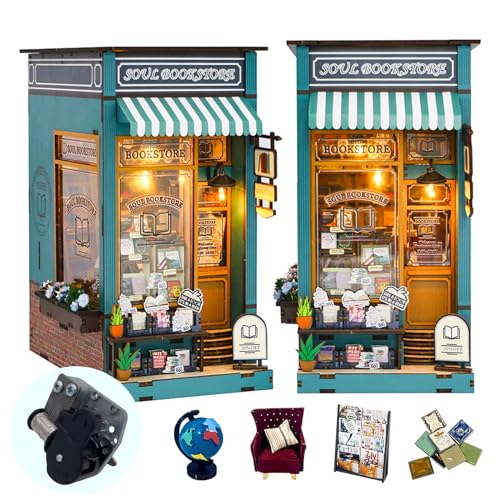
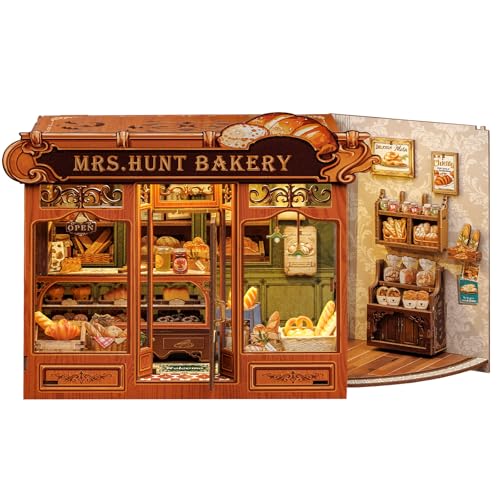
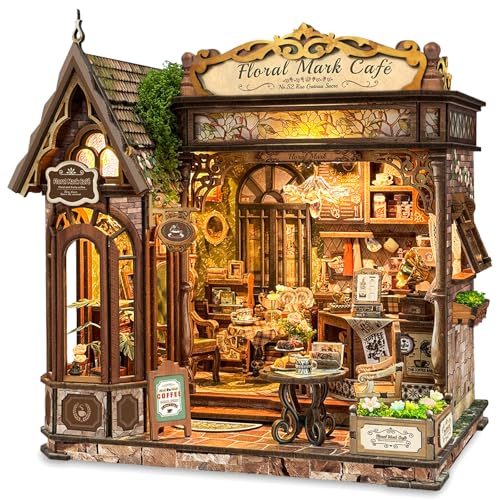
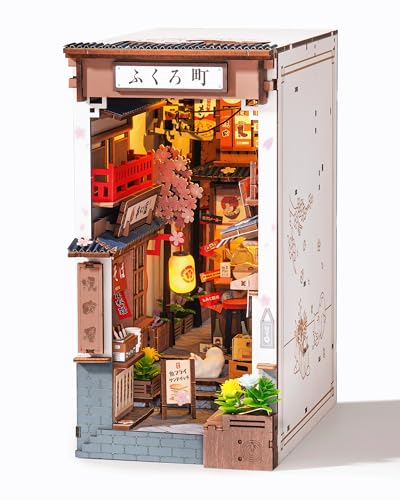
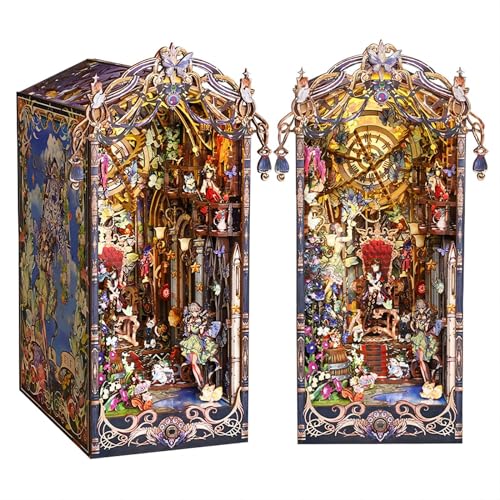
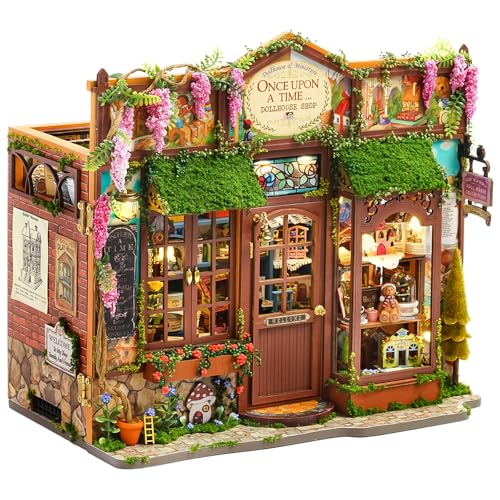
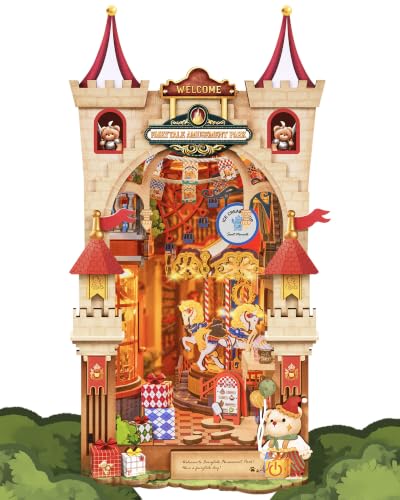
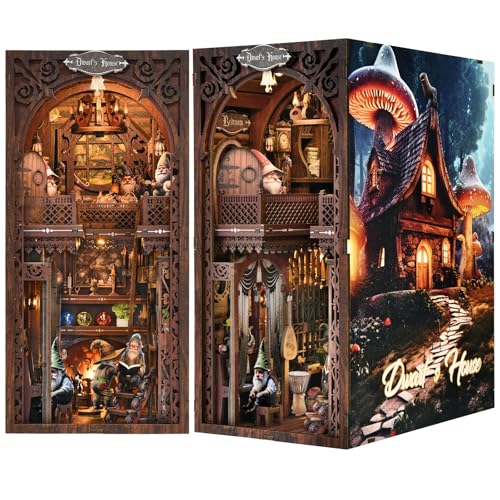
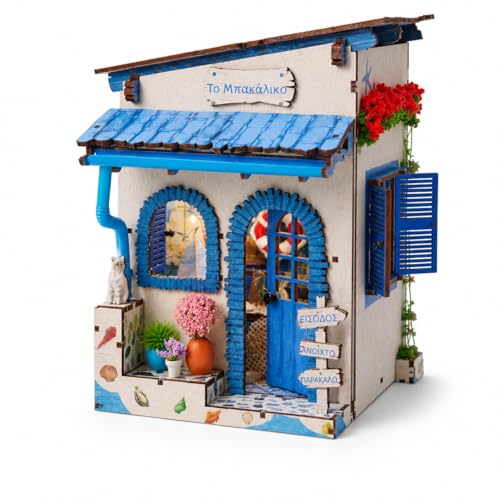
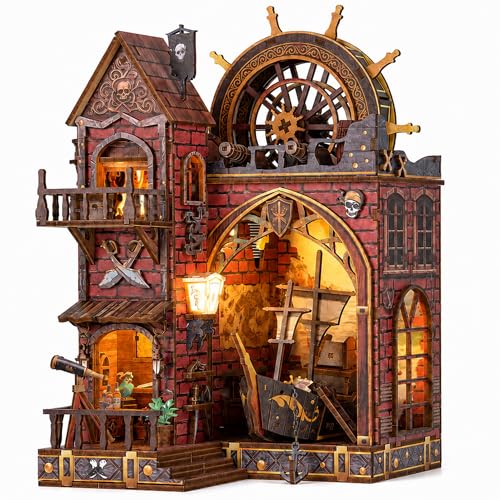
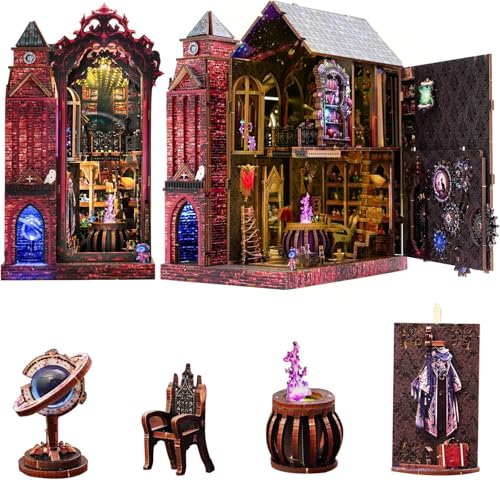
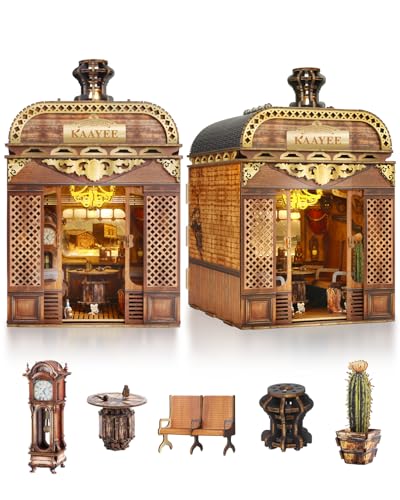
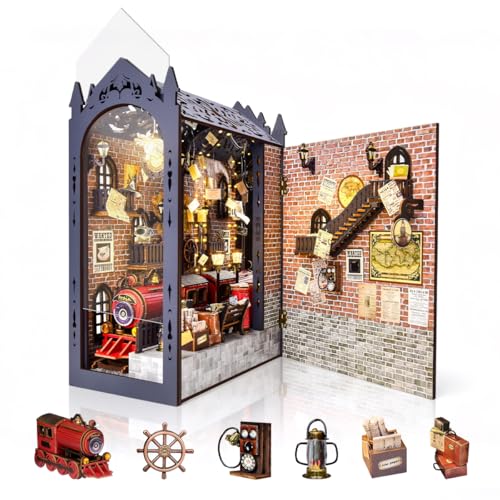
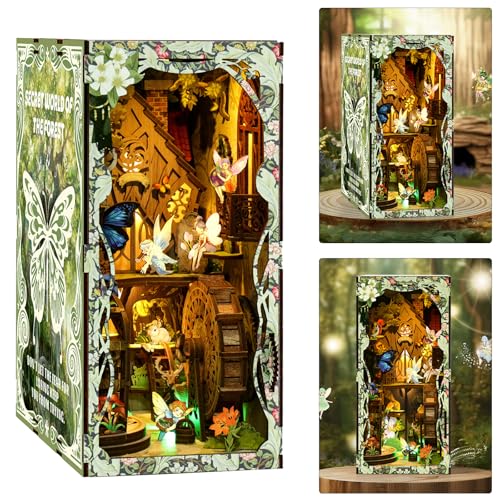
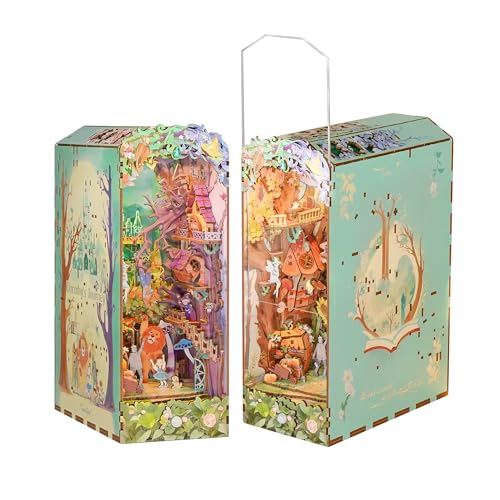
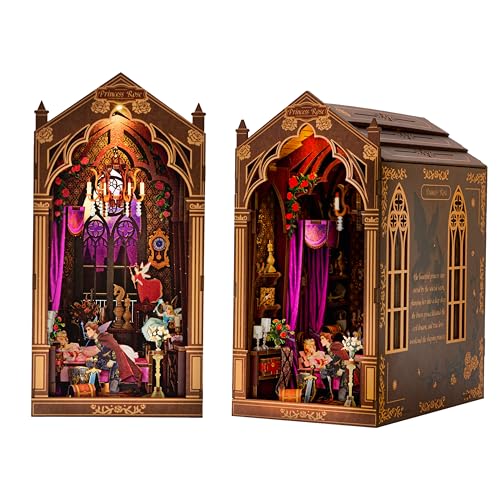
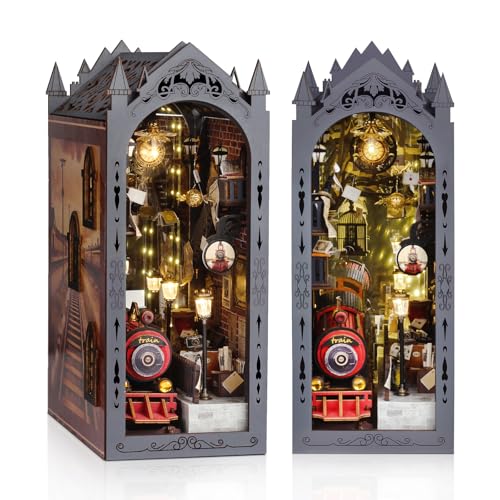
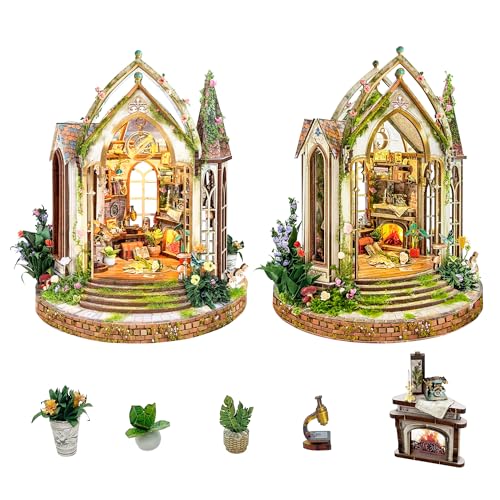
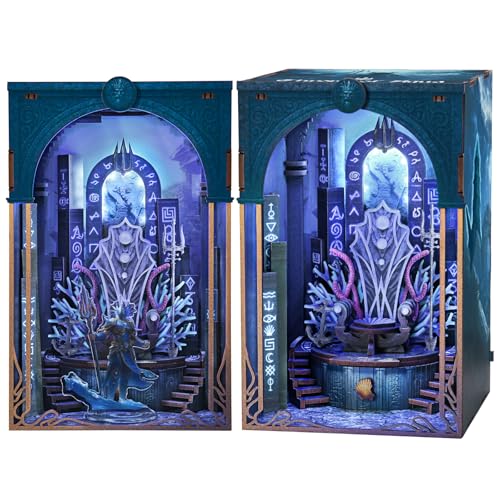
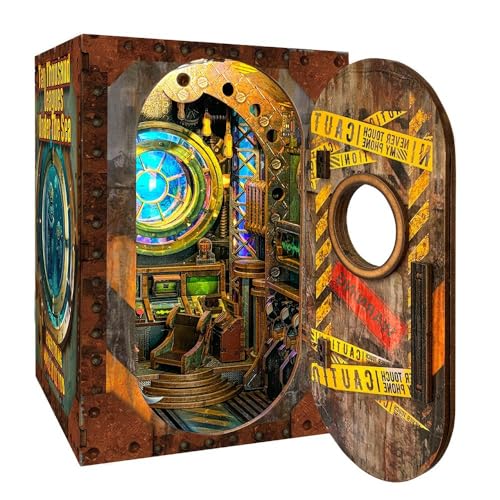
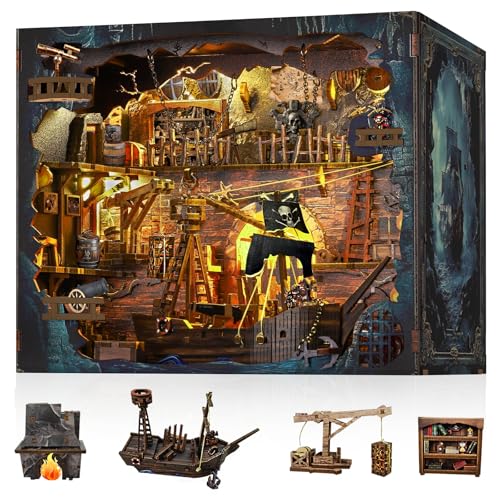
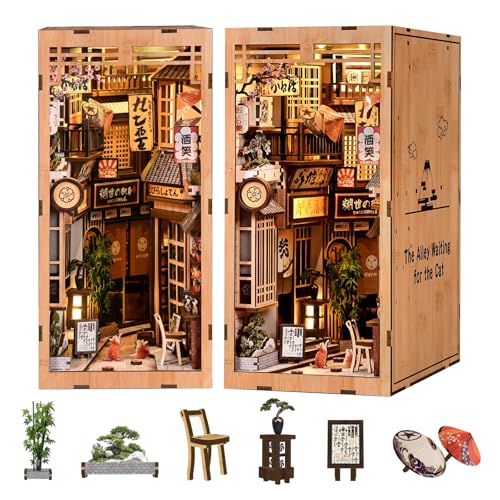
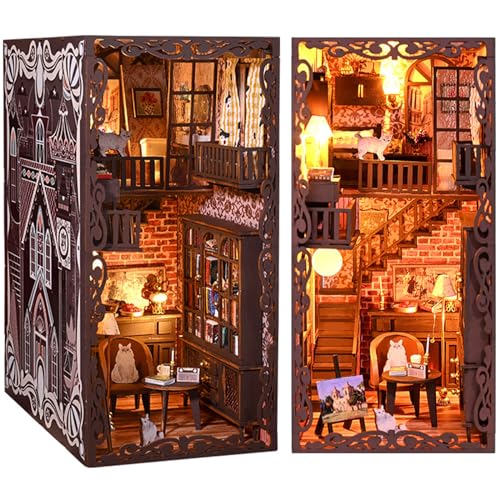
A book nook kit (also called a bookshelf insert or shelf diorama) is a narrow, three-dimensional scene designed to slide between your books like a hidden doorway into another world. You build it yourself from laser-cut wooden pieces, paper scenery and acrylic panels — then add the included LED strip to bring the whole scene to life. From the front of your shelf it looks like a tiny lit-up alley, bookshop, café or castle tucked into your collection.
The format went mainstream after Japanese artist monde went viral with a "between-the-books" alley diorama. Manufacturers quickly turned the idea into kit form: flat-packed boxes of laser-cut wood, paper, acrylic and LED lights that you assemble yourself, like a 3D wooden puzzle. Today there are thousands of kits across dozens of themes and difficulty levels.
We have assembled more than 40 kits across every major brand since 2023. The collection below represents the ones we would buy again — selected on build quality, instruction clarity, included LED lighting and finished display result. Every kit links directly to its live Amazon listing. For a deeper introduction, see our plain-English guide to what a book nook is.
How a book nook kit works
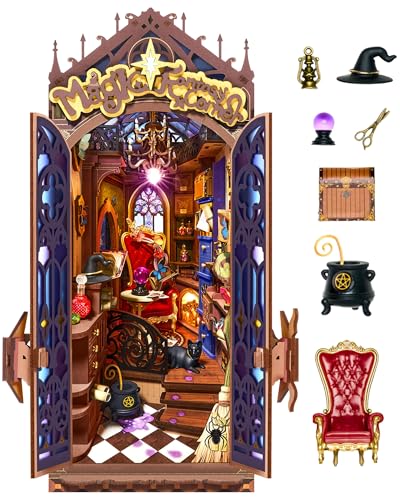
Every kit ships as a set of flat-packed components. Here is what is typically in the box and what each element does:
- Laser-cut wood sheets — the structural backbone: walls, floors, shelves and decorative panels. You pop the pieces out and slot them together. Better kits have tight, precise joints that need no trimming; lower-quality kits may need a craft knife to clean up rough tabs.
- Paper scenery — pre-printed wallpaper, shop signs, tiny menu boards and decorative elements. Glued onto the wood structure to give the scene its character and colour.
- Acrylic panels — clear or tinted pieces used for windows, mirrors and in infinity-mirror kits, the front face that creates the endless-depth illusion.
- LED strip (USB or battery) — the single element that transforms the finished kit from a model into a tiny world. Almost all quality kits include one; the glow in a dim room is most of what makes people stop and stare.
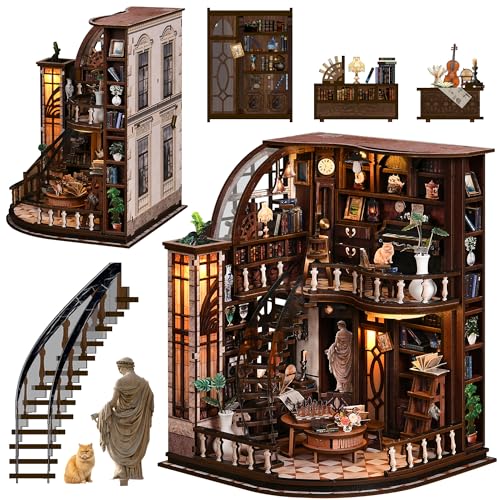
- Miniature furniture and props — tiny chairs, lanterns, books, flower pots, signage. The detail work that fills the scene and gives each kit its personality.
- Dust cover — a clear acrylic front panel that clips on and keeps the scene clean on your shelf. Included in better kits; its presence is a quality signal.
- Illustrated instruction manual — the biggest quality differentiator between brands. Good manuals are numbered, photo-referenced and accurate in English. Poor ones are blurry, translated badly or skip steps.
Build sequence is always the same: pop pieces out, dry-fit before gluing, assemble the outer shell, add interior structure, route and test the LEDs before sealing the back, then place furniture and paper detail. See our complete step-by-step build guide for the full process.
Browse by theme
The theme you choose shapes both the build experience and how the finished piece looks on your shelf. The 12 main categories, from most beginner-friendly to most advanced:
Library & Bookshop Nooks
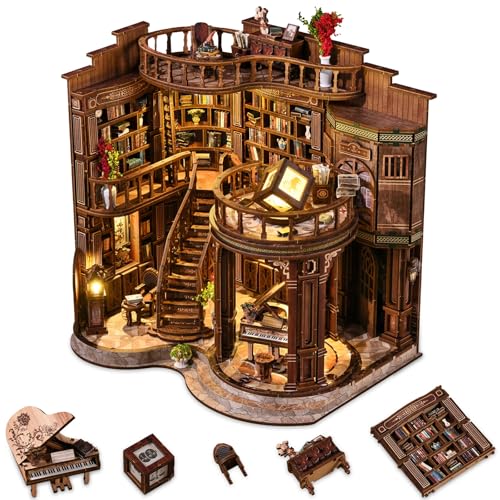
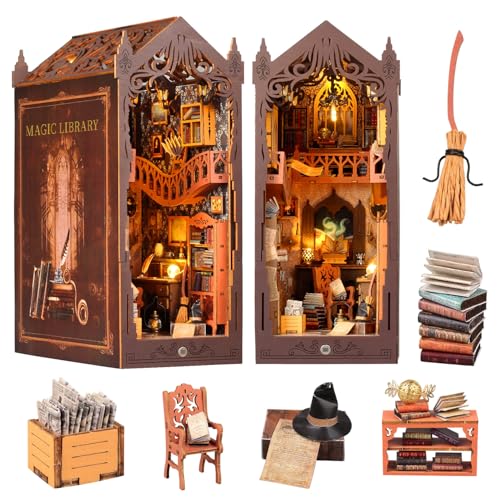
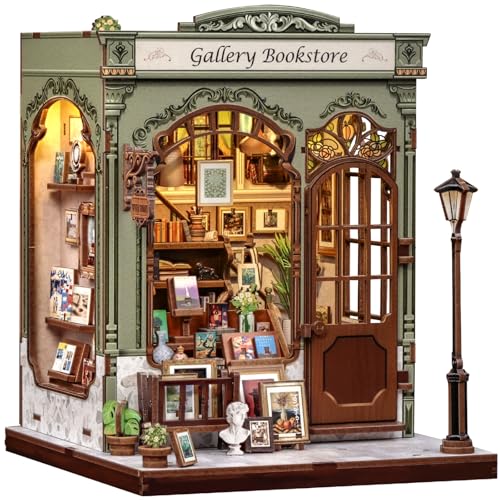
The most natural fit for a bookshelf. Forgiving rectangular builds, clear instructions — the best starting point for first-time builders.
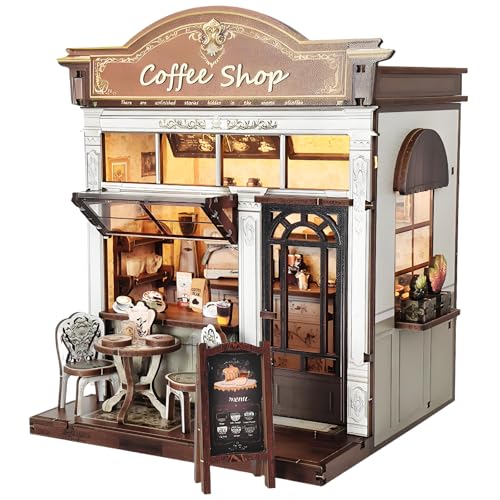
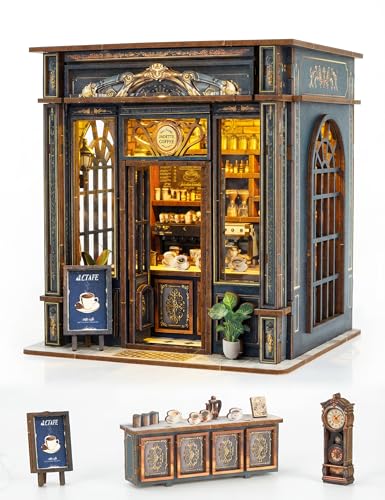
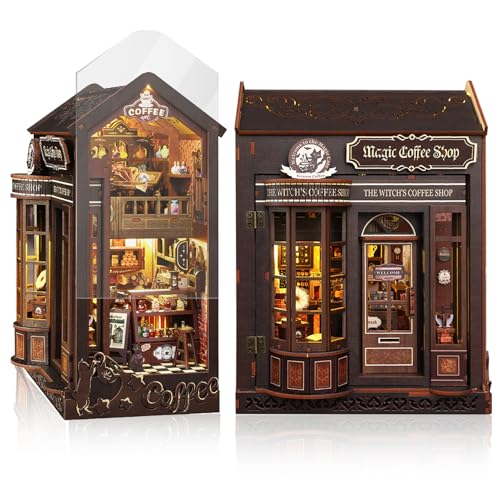
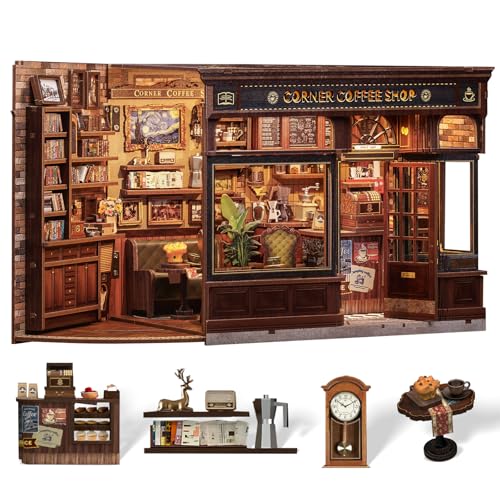
Coffee Shop Nooks
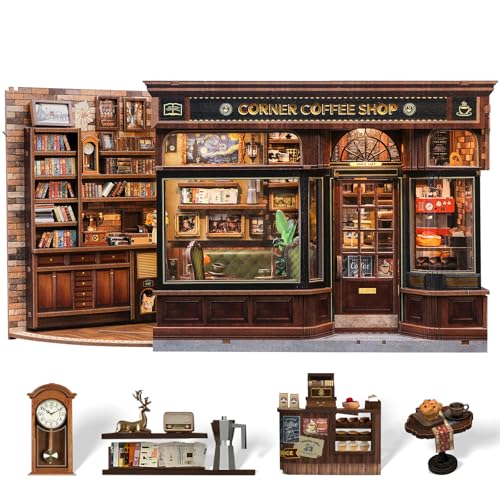
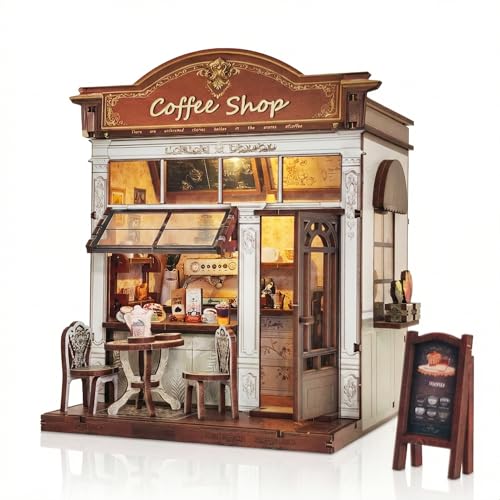
Warm café interiors packed with tiny detail. Consistently the top-selling category alongside bookshops.
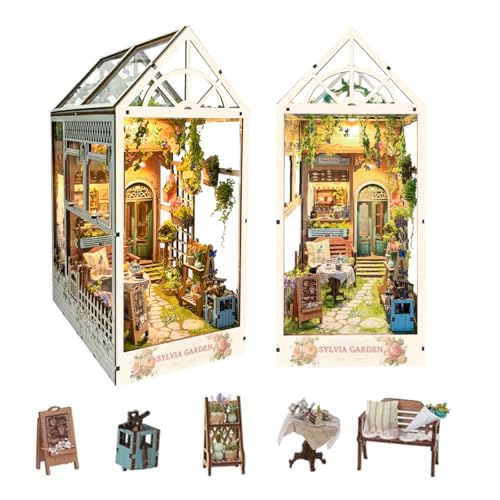
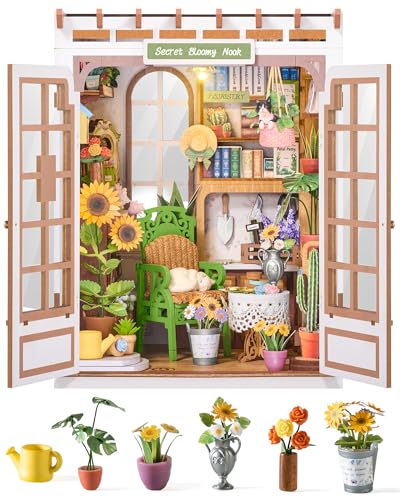
Garden & Greenhouse Nooks
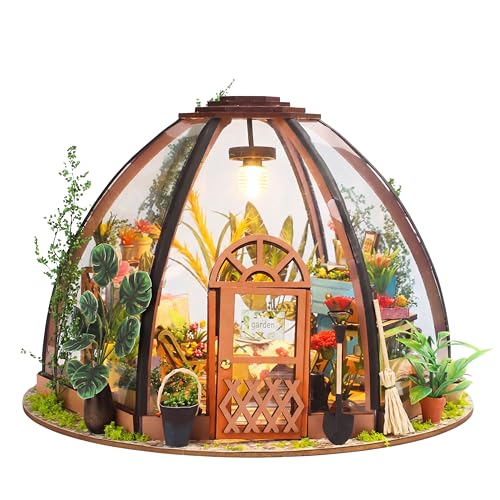
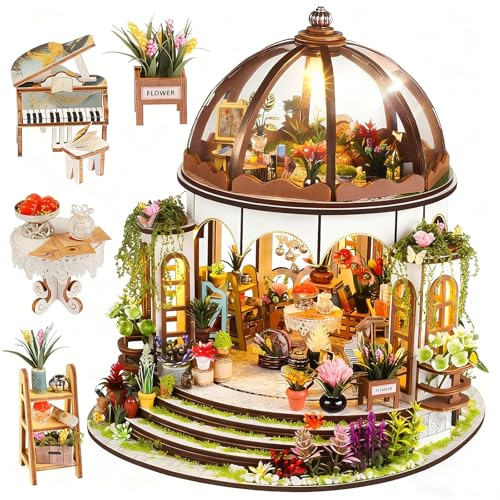
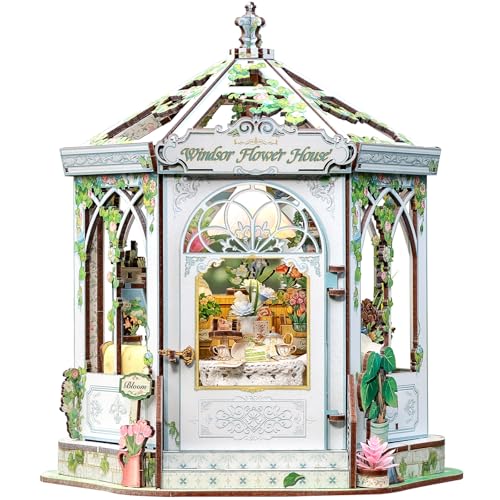
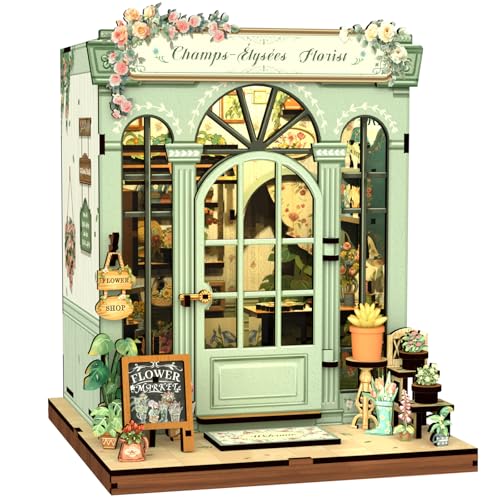
Lush paper foliage and floral scenes. Forgiving structure, beautiful finished result — ideal for a second build.
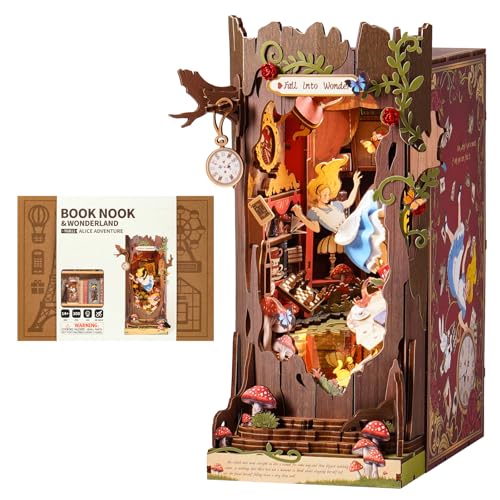
Fairy Tale Nooks
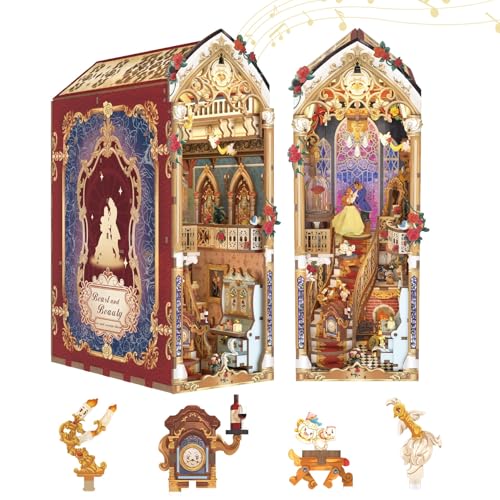
Enchanted forests, elf houses and storybook cottages with whimsical detail.
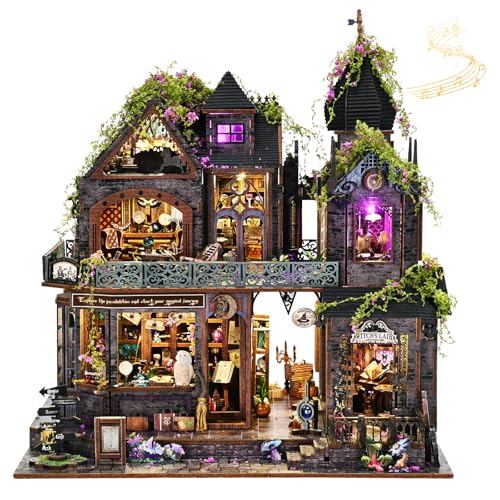
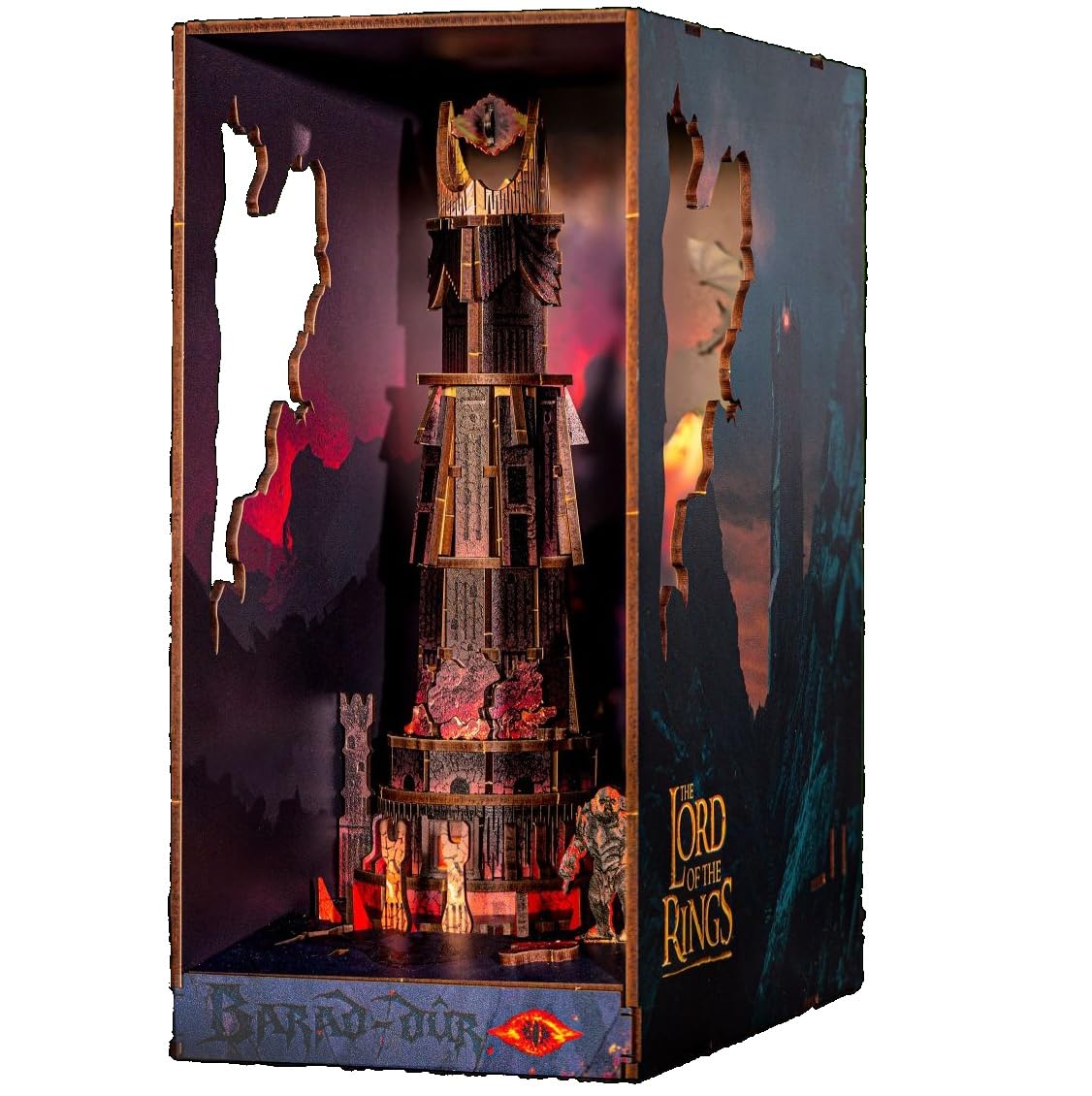
Magic & Fantasy Nooks
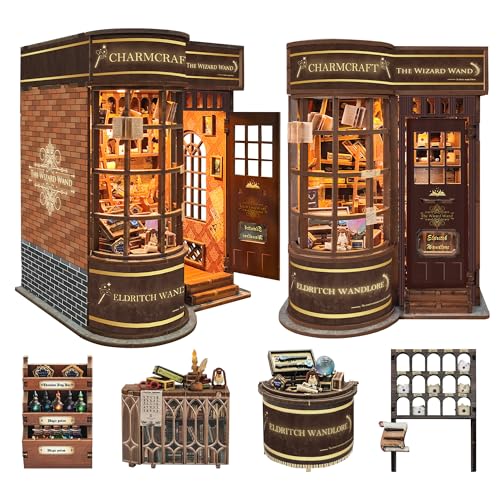
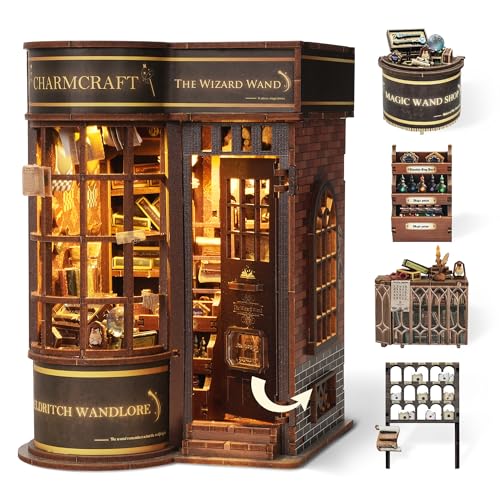
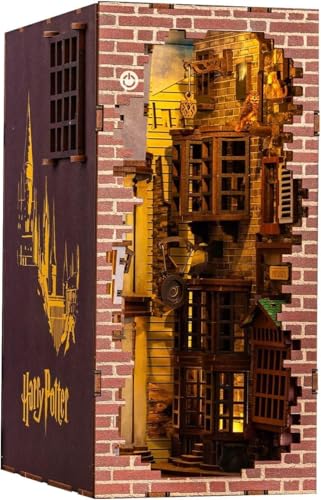
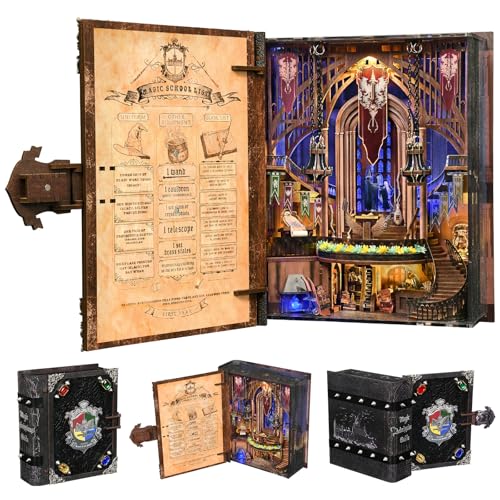
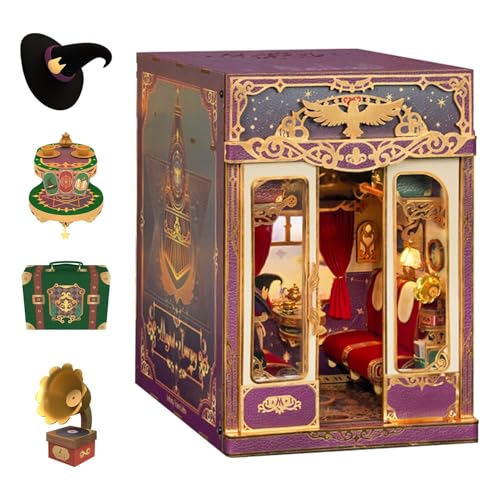
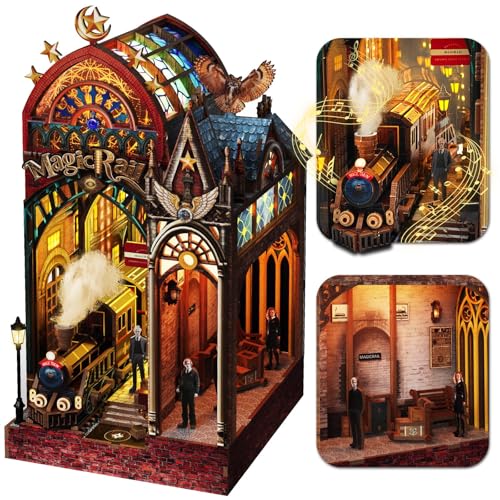
Wizard alleys and infinity-mirror fantasy scenes. The highest wow-factor for gifts — and for your own shelf.
Japanese & Asian Nooks
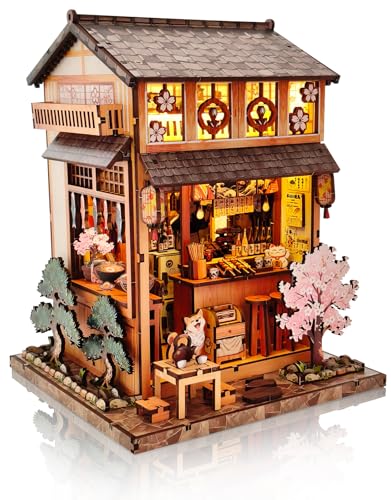
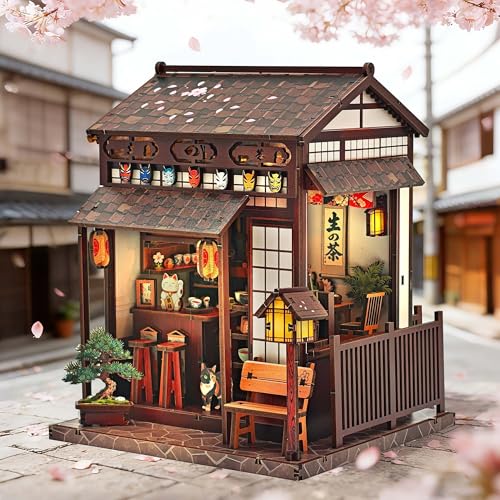
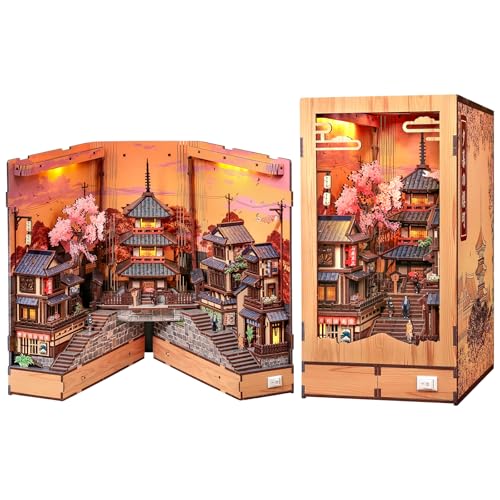
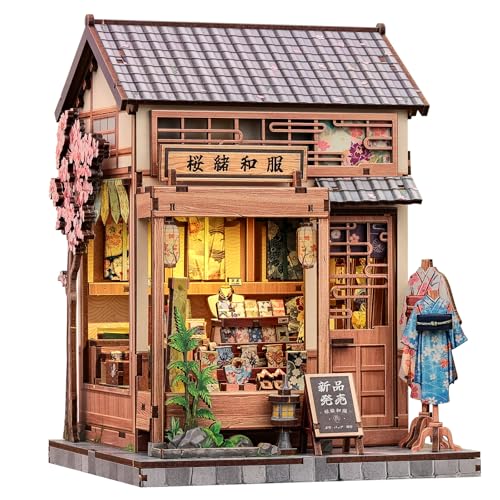
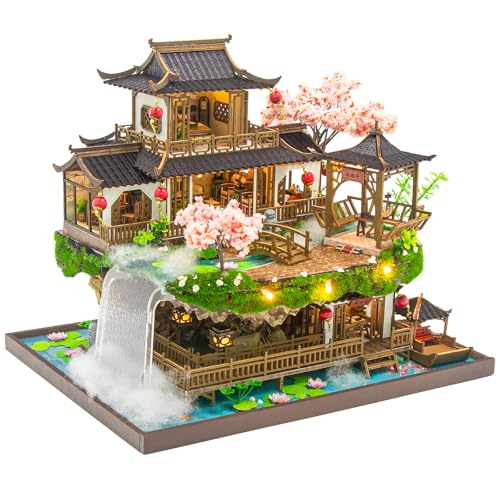
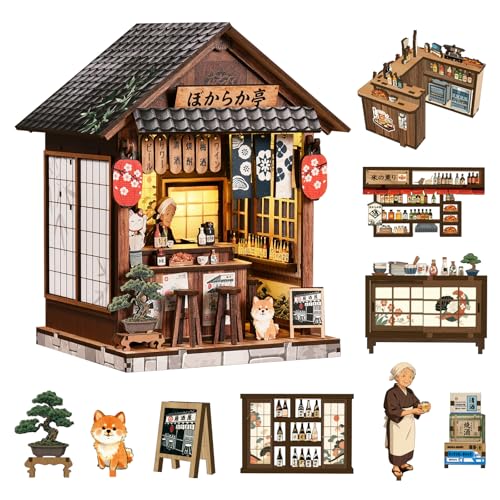
Sakura streets, izakaya alleys and Kyoto shopfronts. Atmospheric and visually distinctive.
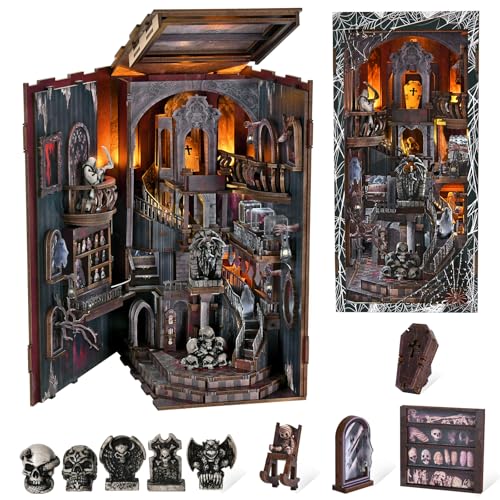
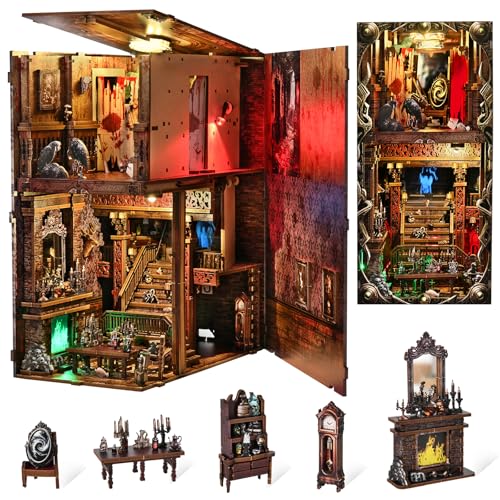
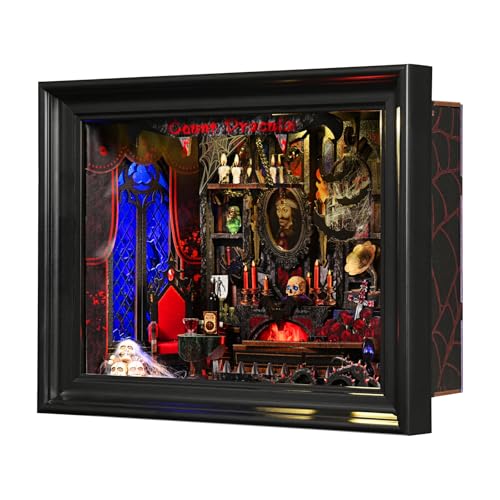
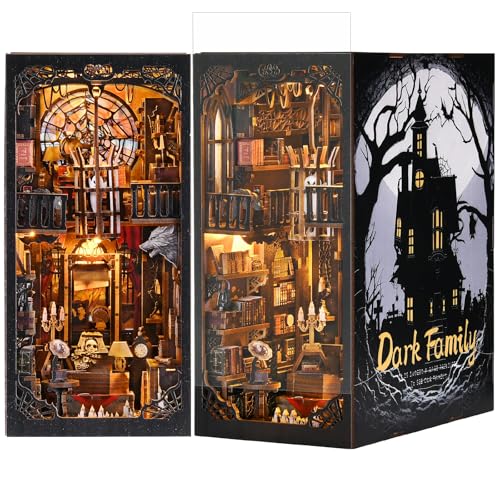
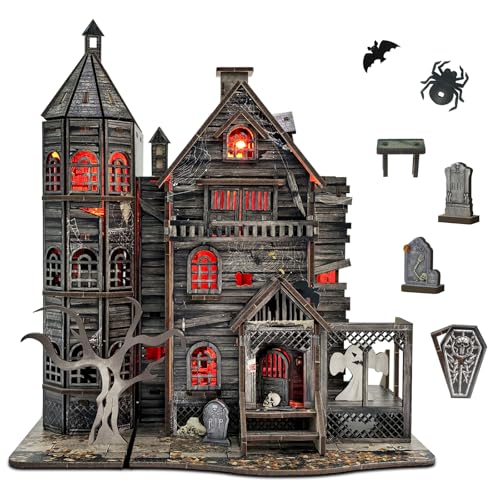
Halloween & Gothic Nooks
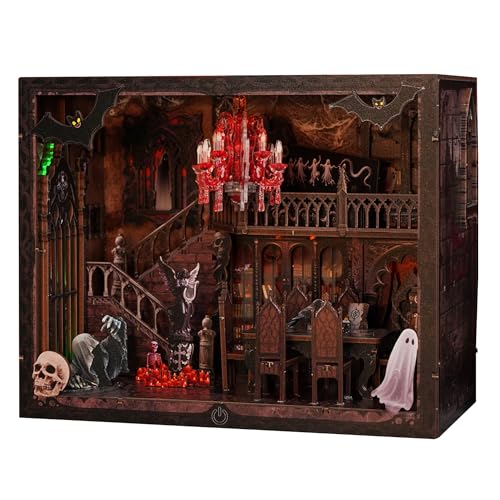
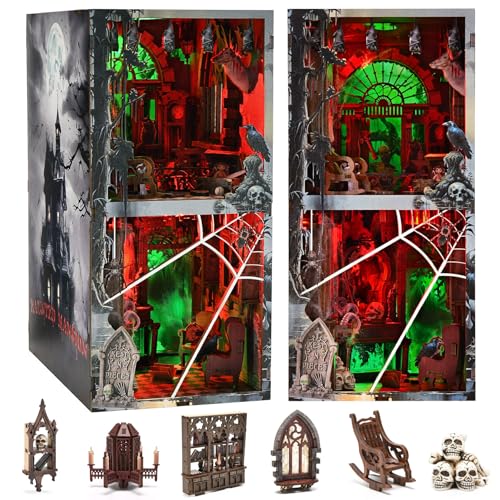
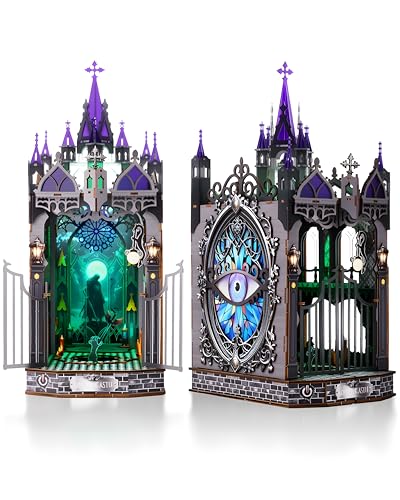
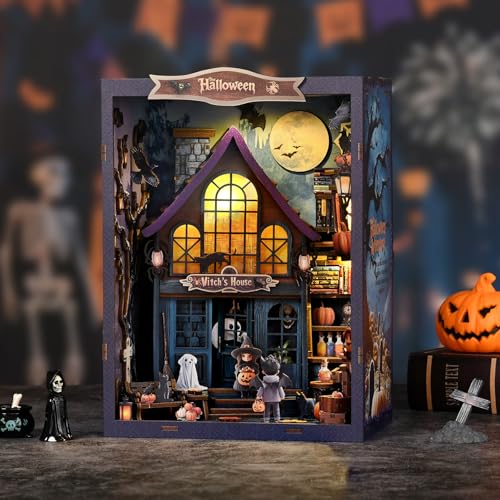
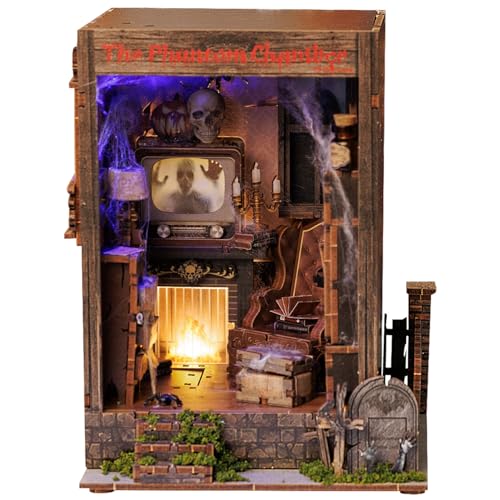
Haunted manors, Dracula's study and spooky alleys. Great seasonal gifts and year-round for dark-aesthetic readers.
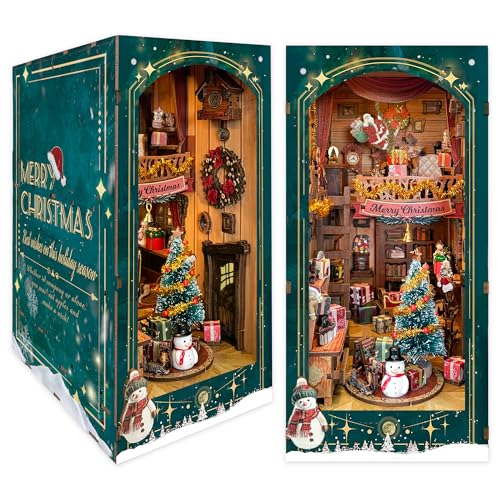
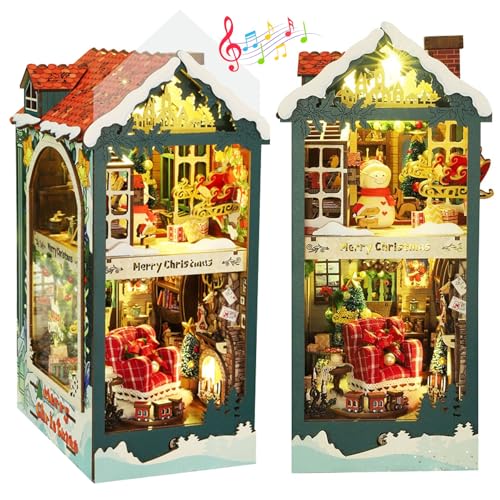
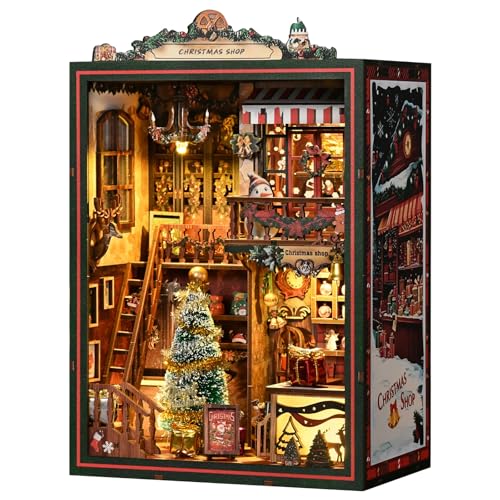
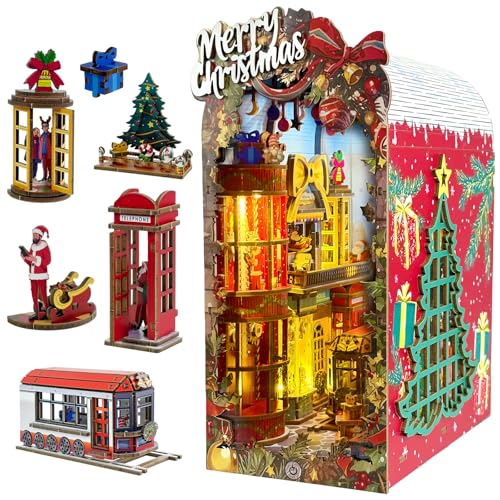
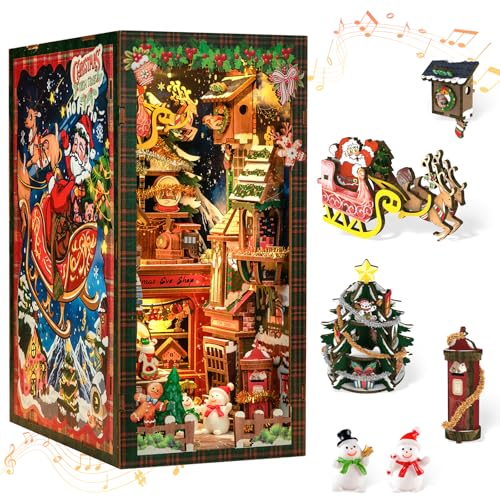
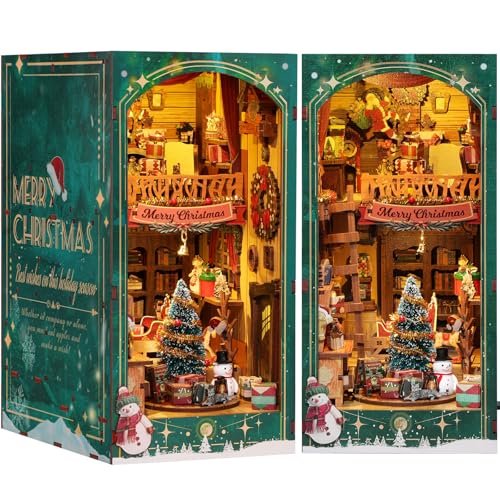
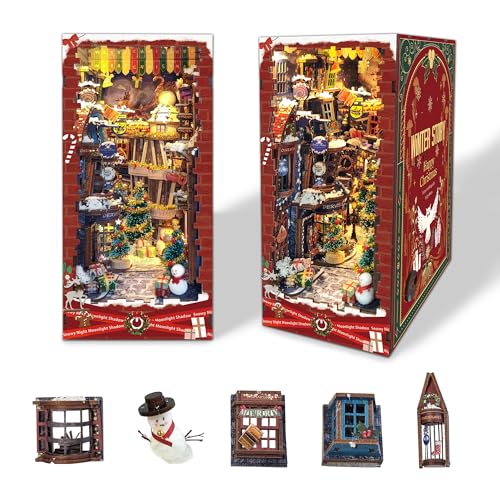
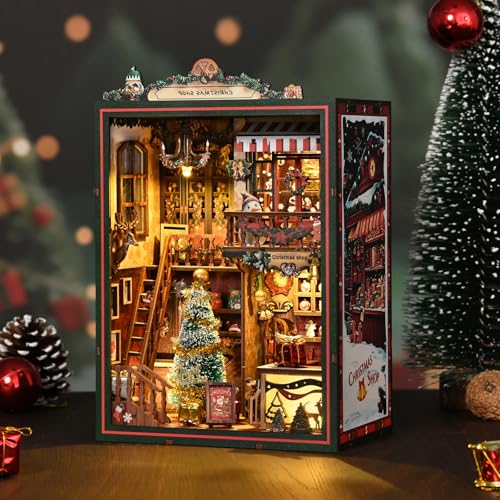
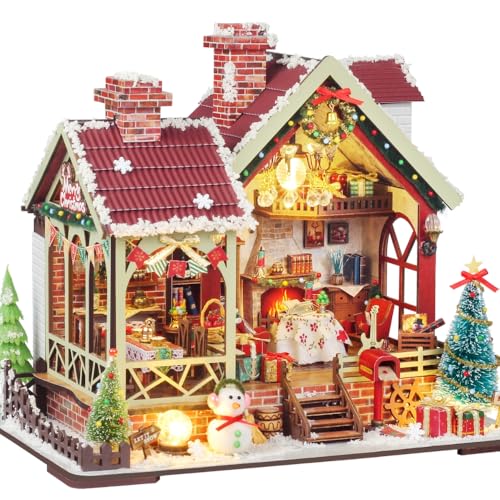
Christmas & Winter Nooks
Festive cottages, rotating music boxes and snowy scenes. The most popular gift-season category.
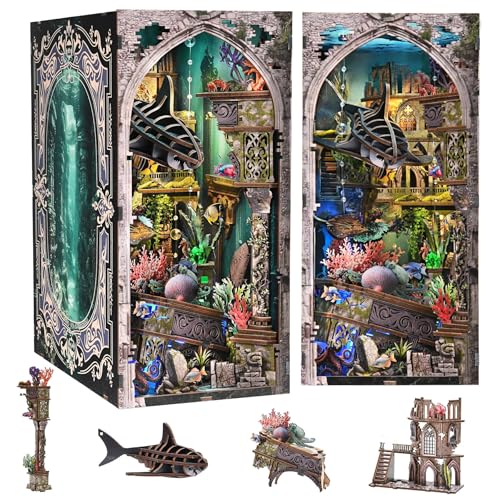
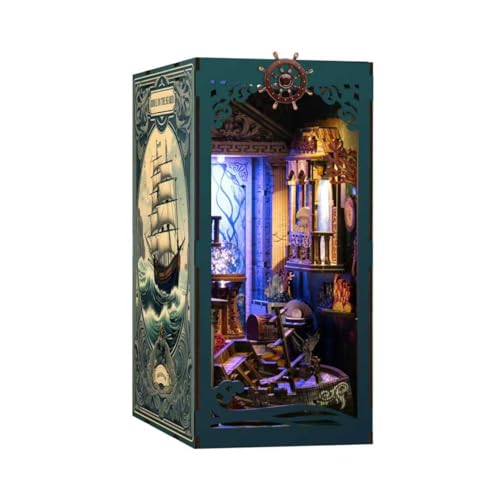
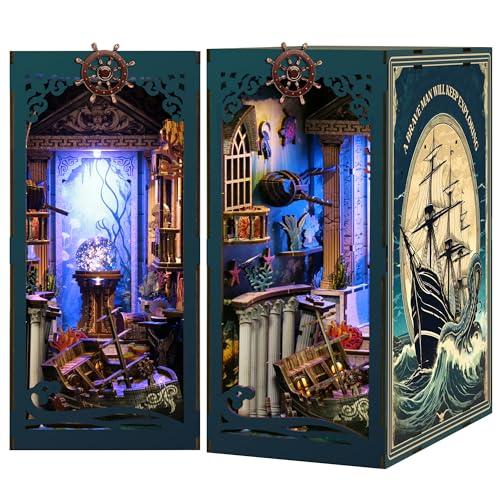
Ocean & Seaside Nooks
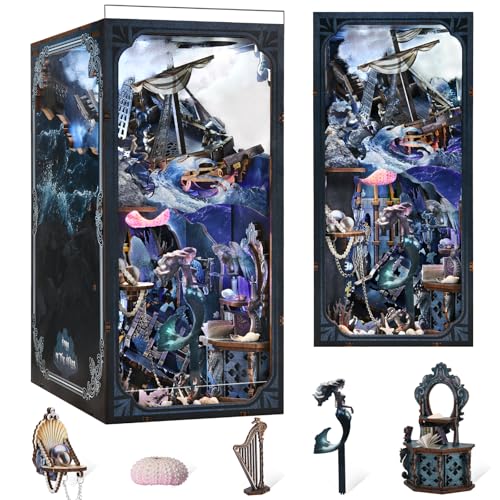
Underwater scenes, beach corners and lighthouse dioramas — a niche with growing variety.
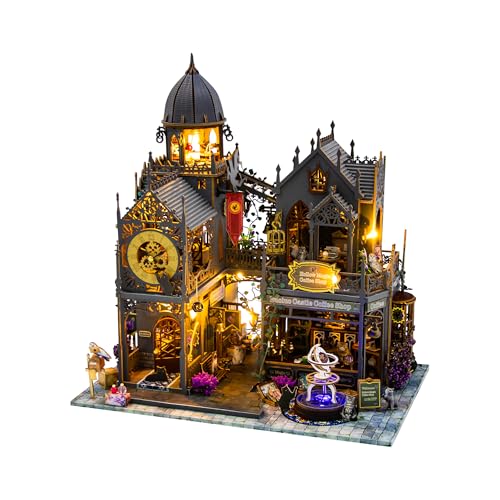
Castle & Medieval Nooks
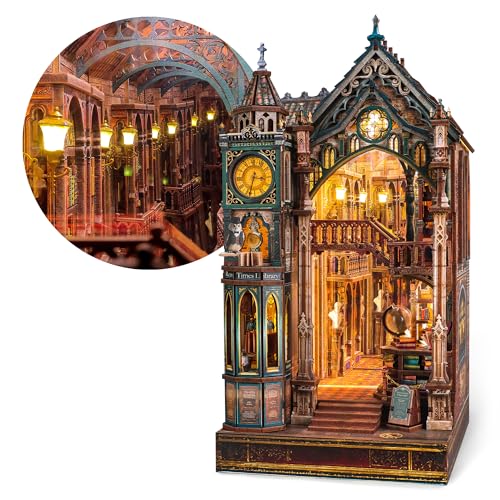
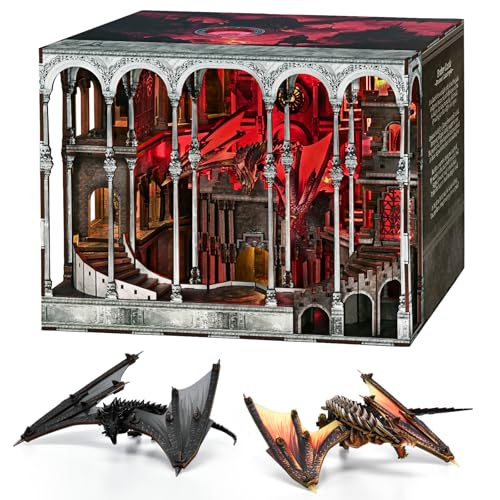
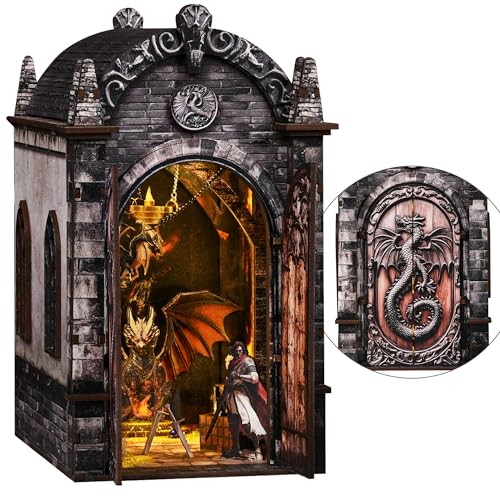
Dramatic fortresses, gothic keeps and dragon towers. Advanced builds with impressive scale. Best for experienced builders.
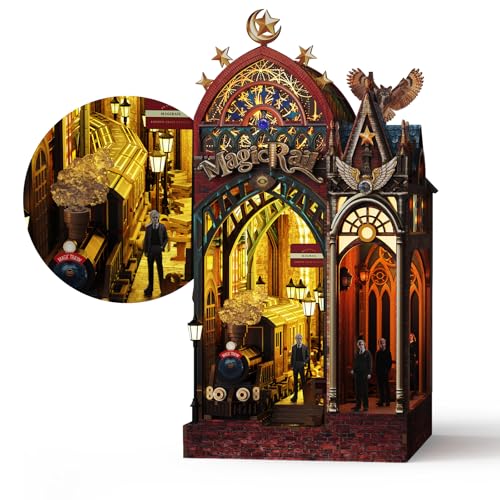
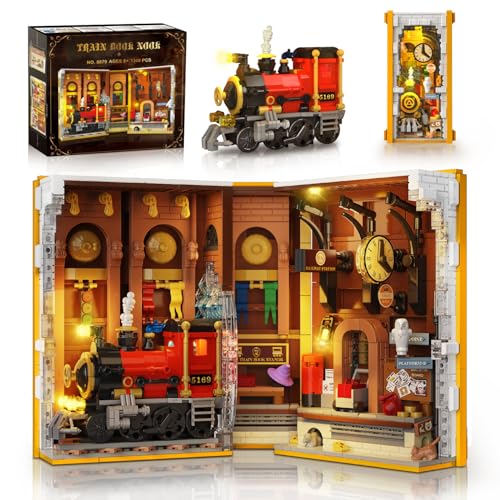
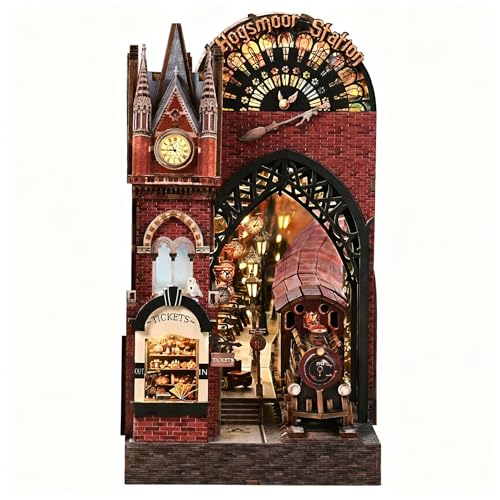
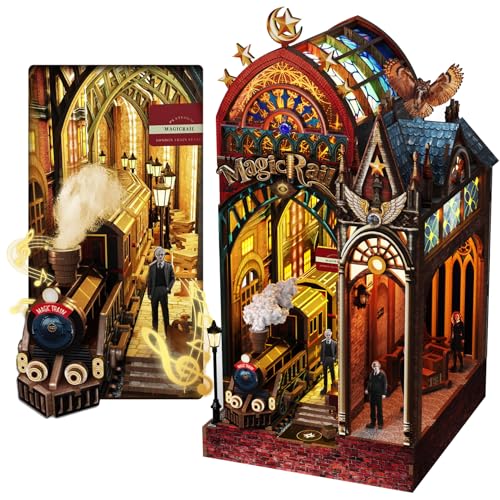
Train Station Nooks
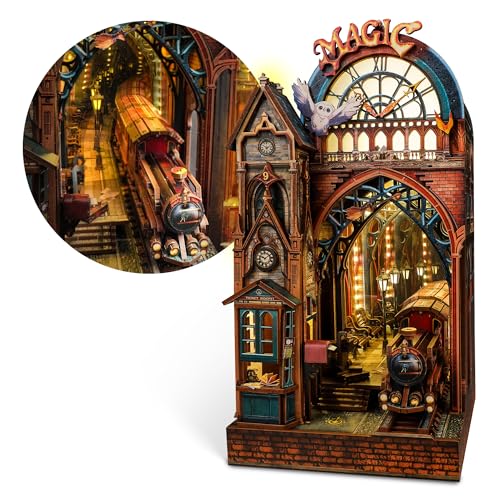
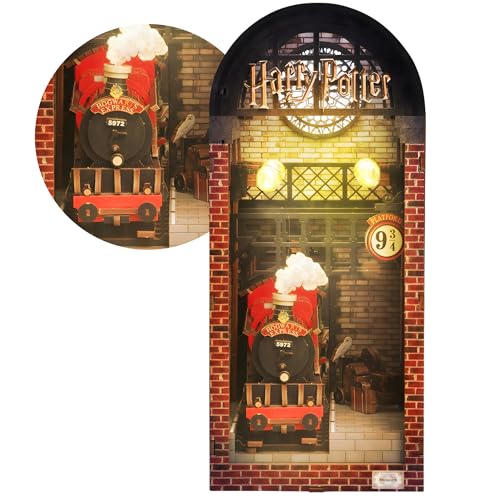
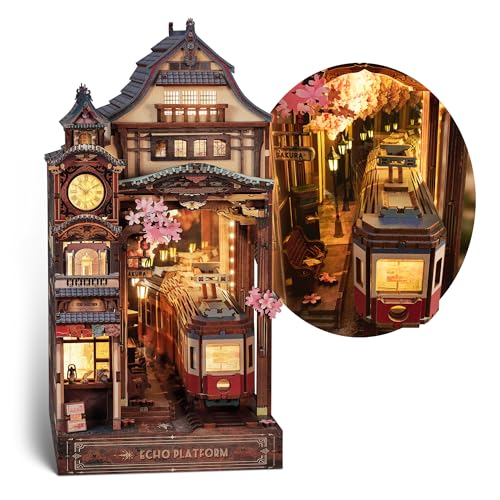
Magical platforms and infinity-tunnel railway scenes. Architectural grandeur at high piece counts.
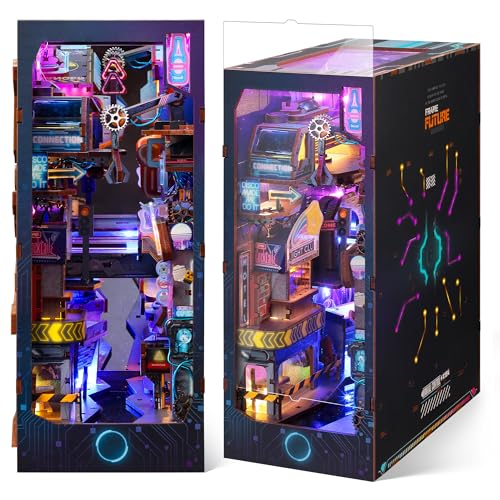
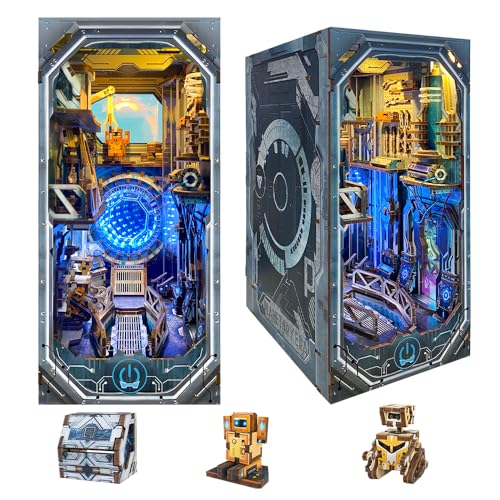
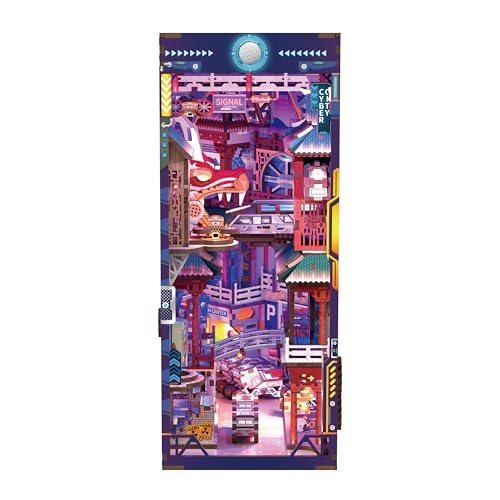
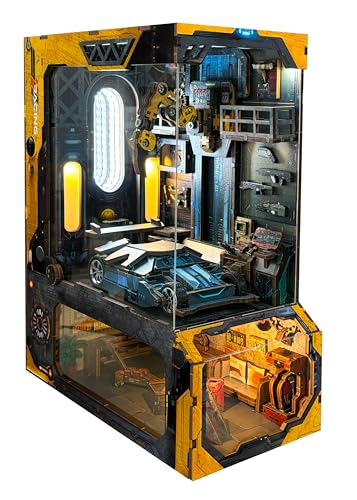
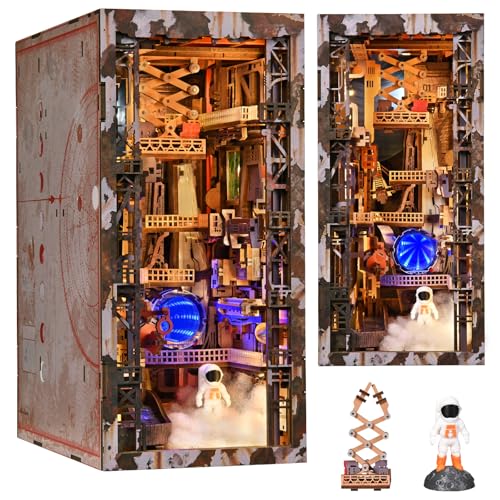
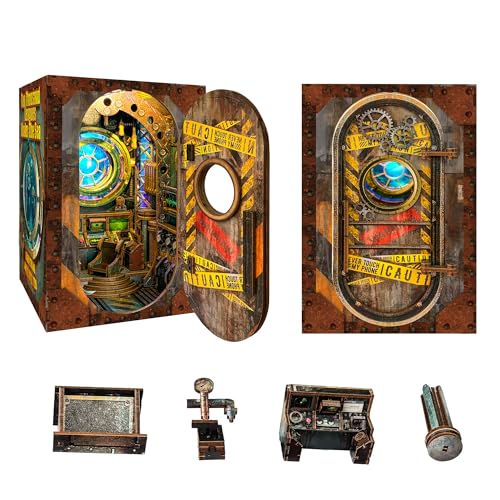
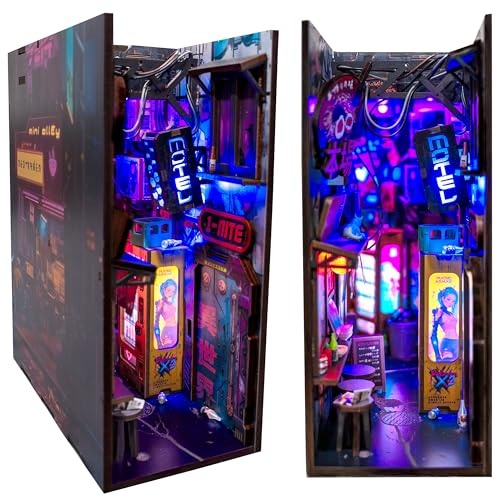
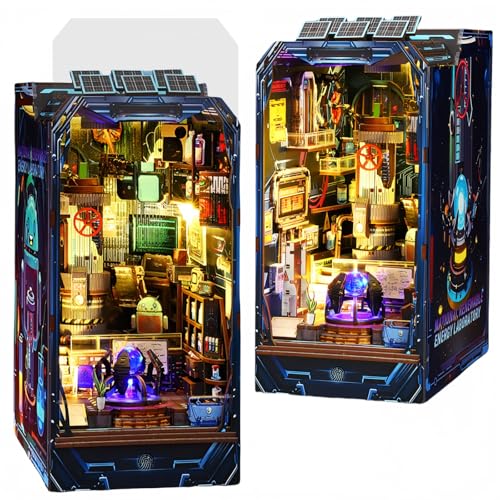
Cyberpunk & Sci-Fi Nooks
Neon-lit futuristic scenes with colour-LED and cool-white effects. For readers who own bookshelves and ring lights.
Skill levels — which is right for you?
The listings use "beginner," "intermediate" and "advanced" loosely. Here is what each level actually means in practice, based on 40+ personal builds:
Beginner (100–200 pieces, 3–5 hours)
Simple rectangular outer shell, minimal interior divisions, pre-printed paper elements, one LED strip along the top. Bookshop, library, garden and café themes dominate this range. The structure is forgiving: minor glue imprecision doesn't show in the finished piece. Best brands at this level: CUTEBEE and Rolife for instruction quality; Cutefun for value with LED and dust cover included. See our detailed beginner kit picks guide.
Intermediate (200–350 pieces, 6–12 hours)
Multi-level interiors, higher paper element counts, some kits add an infinity mirror or a more complex LED layout. Japanese street scenes, mid-tier fantasy kits and most castle kits sit here. You need patience for the drying stages between floors, and the manual reading matters more. FUNPOLA enters here with its infinity-mirror kits; MiniCity's fantasy and sci-fi builds also land at this level.
Advanced (350+ pieces, 10–20+ hours)
Large train-station sets (some exceed 1,000 pieces), high-tower castle kits, music-box mechanism builds. Mirror alignment work, complex multi-zone LED wiring, tiny stone-texture detail layers. Not for first builds — but the finished result is the kind of display piece that genuinely stops visitors. Build across multiple sessions. Our realistic build time guide has the full breakdown.
What to look for in a kit listing
The Amazon listings for book nook kits vary enormously in what they tell you. Here is what to check before buying:
- Piece count. The single best proxy for difficulty and build time. Under 200 = beginner afternoon. 200–350 = weekend. 350+ = multi-session project. If the listing doesn't state it, check the reviews for mentions.
- "LED included" or "lights included". Not all kits include LED lighting. A kit without lights is a significantly worse display result — the glow is most of what makes the finished piece compelling. Confirm it's listed as an inclusion.
- "English instructions" or "English manual". Many kits originate in China and translation quality varies enormously. Check listing photos for instruction examples, or look in the reviews for mentions of instruction clarity.
- A dust cover. A clear acrylic front panel to protect the scene long-term. Not all kits include one — its presence signals that the manufacturer thought about the display experience, which usually correlates with overall quality.
- Review photos showing finished builds. Photos from verified purchasers are the most reliable quality signal. Generic 5-star reviews with no photos should be weighted less than a few detailed reviews with finished-kit photos.
- Brand history. Kits from established brands with multiple listings and long review histories are safer than single-product sellers with minimal history. See our brand comparison guide for who to trust.
Price ranges — what to expect
Book nook kits span a wide price range, and the relationship between price and quality is real but not linear:
- Budget (under $35): Mostly unknown brands, thin MDF, often without dust covers, variable instruction quality. A few good entry-level kits exist here from Cutefun and similar brands — but the false-economy risk from unknown sellers is highest at this price point. See our best kits under $50 guide for the vetted picks.
- Mid-range ($35–$65): The sweet spot. Reputable brands (CUTEBEE, Rolife, Cutefun) deliver excellent build quality, clear instructions, included LED and dust cover at this range. Almost all of our beginner and intermediate recommendations land here. The finished result looks far more expensive than the price suggests.
- Premium ($65–$120+): Larger kits (300+ pieces), infinity-mirror mechanisms, licensed designs (Harry Potter via Revell), music-box kits, and high-detail advanced builds. The price reflects genuine complexity and build time rather than just brand markup.
Our honest assessment: the upgrade from budget to mid-range is significant and always worth it. The upgrade from mid-range to premium is a choice about complexity and display scale, not quality per se — mid-range kits from good brands look stunning.
The best book nook kit brands
Brand matters in this category more than most. The main players:
- CUTEBEE — The safest all-round first recommendation. Widest theme range, clearest English instructions, build quality above average for the price. The Owl Bookstore and Corner Coffee Shop are perennial best-sellers for good reason. Best for: beginners through intermediate, most themes.
- Rolife / ROBOTIME — A decade of wooden miniature kit experience shows. Instructions feel like they were written in English, not translated. Polish and finish in the completed piece is above average. Particularly strong on garden, nature and Japanese themes.
- FUNPOLA — The infinity-mirror specialist. Build complexity is higher than average (mirror alignment is precise work) but the depth effect in the finished kit is genuinely extraordinary. The Magic Station and Sakura Train are among the highest-rated kits in the whole category.
- MiniCity — Atmospheric builds that prioritise drama: castle detail, sci-fi atmosphere, magic scenes. Intermediate to advanced difficulty. The Ember Castle is the strongest single kit in the castle category.
- Cutefun — Reliable value. LED and dust cover almost always included. Instructions are decent. A solid choice when you want a good first kit without deep brand research.
- Hands Craft — Officially-licensed character kits (Kuromi, Peanuts, Sanrio). If the recipient is a specific character fan, Hands Craft is the route. Intermediate difficulty.
- Revell — Holds the official Harry Potter Wizarding World license. The Diagon Alley kit is the standout. For dedicated Potter fans who want the franchise-accurate build.
Full breakdown with per-brand kit lists: best book nook brands compared.
Book nook kits as gifts
A book nook kit is one of the most reliably good gifts you can give a reader. It is a hobby (the build), a decoration (the finished piece) and a keepsake (something they made themselves) in one box. Unlike candles or flowers, it stays on the shelf for years and gets commented on by every visitor.
The key to a good book nook gift is theme matching. A Potter fan gets a wizard alley. A coffee lover gets a café nook. A reader gets a bookshop. A plant parent gets a garden scene. The more specific the theme match to the person, the stronger the gift lands — because they will see themselves in it before they have even opened the box.
For gift-specific advice: book nook gift guide — picks by recipient personality. For children specifically: see our age-by-age guide to book nook kits for kids.
Practical gift checklist: under 250 pieces (manageable for a first build), included LED (the glow is the payoff), included dust cover (they will want to display it long-term), and a theme the recipient will actually want on their shelf. Tick all four and you have a gift that will be talked about.
Will it fit on your shelf? Sizing explained
Most book nook kits finish at 18–28 cm (7–11 in) tall, 9–15 cm (3.5–6 in) wide and 10–15 cm deep. This is designed to slot between standard paperbacks and hardcovers on any adult bookshelf.
IKEA Kallax: Yes — Kallax cubes are 33 cm tall internally, so standard book nooks fit with room to spare. Place the nook in one side of a cube alongside books for the classic display arrangement. IKEA BILLY: Yes — BILLY shelves are 26 cm deep (plenty) with around 26–32 cm clearance between shelves in standard configurations. Measure your specific unit if you have adjusted shelf positions.
Castle and train-station kits can reach 30–35 cm tall — check the listing dimensions for these. Standard bookshop, café and garden kits are universally shelf-compatible. Full details in our book nook size and shelf fit guide.
The five most common buying mistakes
After reviewing hundreds of Amazon listings and building 40+ kits, these are the mistakes we see most often:
- Buying on price alone from an unknown brand. The gap in laser-cut precision, instruction quality and material thickness between established and no-name brands is large enough to ruin a build. The price saving is not worth it. Stick to the brands listed above, especially for a first kit.
- Ignoring the piece count. "Beginner" is used loosely by sellers. A kit labelled beginner with 300 pieces is a very different commitment to one with 150 pieces. Always check the piece count, not just the label.
- Choosing a kit without LED lighting included. A book nook without light looks like an unfinished model. Lit up in a dim room, it looks like a tiny world. Confirm LED is in the inclusions list before buying — some budget kits omit it.
- Buying a gift without thinking about the recipient's temperament. Some people love building; some find it stressful. A detailed 300-piece kit is a wonderful gift for a patient crafter and a frustrating one for someone who expected a quick evening project. Lower piece count = more universally enjoyable gift.
- Not checking if the book nook will fit the specific shelf. Most standard kits fit most adult bookshelves, but castle and train-station kits can be taller than expected. Measure your available height before ordering.
Displaying your finished book nook
Placement makes a significant difference to how impressive the finished kit looks:
- Eye level is optimal. The LED glow and forced-perspective depth are most visible from a standing or seated eye-level position. Bottom-shelf placement reduces the effect significantly.
- Dim ambient light is the magic condition. A book nook in a brightly-lit room is a nice decoration. The same kit with room lights off and LED on looks like a portal. Even a smart-plug timer set for evenings transforms the display experience.
- Books on both sides. The nook is designed to be flanked by books — they provide context and make the "window into another world" illusion work. Without books, it reads as a standalone model rather than a hidden discovery on your shelf.
- Wire management. For USB-powered kits, the cable runs down the side or along the shelf back. A cable clip or a channel behind the books keeps the display clean. Battery-powered kits avoid this entirely but need regular battery replacement if run often.
How to choose when you don't know where to start
Ask three questions: What theme? (something you'll want to look at every day — match your room's aesthetic or the recipient's interests). What piece count? (under 200 for a first build or a universally enjoyable gift; 250+ when you know you enjoy detailed craft work). Is it a gift? (if yes, prioritise recognisable theme and included dust cover over build complexity).
Then browse the matching collection above, check that the listing confirms LED lighting and English instructions, confirm the kit is from a brand with a long review history, and trust the photos from verified purchasers more than the star average alone. Kits with 200+ genuine reviews and 4.5+ stars are almost always safe choices.
Still uncertain? Our best book nook kits roundup ranks the top picks by theme with specific product recommendations. Our honest worth-it guide covers the full value question for those still on the fence.
Guide library
Every question you might have about book nook kits — answered in depth:
128 book nook kits





















Frequently Asked Questions
What is a DIY book nook kit?+
A book nook kit is a laser-cut wooden diorama designed to sit between your books on a shelf. You assemble the pieces with glue, wire the included LED strip, and end up with a tiny glowing world — a cozy bookshop, a wizard alley, a Japanese street — built into your bookshelf.
How many book nook kits are there?+
There are thousands on the market. We curate a hand-picked selection across the most popular themes so you do not have to wade through low-quality listings. Every kit here has been selected on build quality, instruction clarity, included LED lighting and finished display result.
Are these kits in stock?+
Every kit links to its live Amazon listing where you can confirm current price and availability before buying. Prices change frequently — check via the "View on Amazon" button for the live price.
Are book nook kits hard to build?+
Most kits are beginner-friendly. Library, bookshop and café themes have the most forgiving structures and the clearest instructions. Infinity-mirror kits, castle kits (300+ pieces) and music-box kits are more advanced. See our beginner guide to choose the right difficulty level for your first build.
What brands are best for book nook kits?+
CUTEBEE, Rolife, Cutefun, FUNPOLA and MiniCity are the most reliable brands for quality and instruction clarity. For licensed Harry Potter kits, look for Revell. See our brand comparison guide for a full breakdown.
How long does a book nook kit take to build?+
Beginner kits (100–200 pieces) take 3–5 hours. Mid-range (200–300 pieces) need a weekend. Advanced builds (300+ pieces) can run to 15 hours across several sessions. Check the piece count in the listing.
Do book nook kits come with LED lights?+
Almost all quality kits include an LED strip — USB or battery powered. The glow is the most important part of the finished display. Avoid kits that do not list LED lighting as an inclusion.
Will a book nook kit fit on my shelf?+
Most book nooks finish at 18–28 cm tall and 9–15 cm wide — sized to stand between standard books. They fit in IKEA Kallax and BILLY shelves without modifications. Very tall castle or train-station kits can reach 35 cm — check the listing dimensions.